

Five Lessons from the Team at Oklahoma Cancer Specialists and Research Institute
At Oklahoma Cancer Specialists and Research Institute (OCSRI), Lead Radiation Therapist Megan Barrett has seen firsthand how Surface Guided Radiation Therapy (SGRT) changes everything, from patient setup to team confidence. But she’s quick to remind others that the transition doesn’t happen overnight.
“Adopting SGRT is a journey, not a switch you flip,” Barrett says. “You learn more once you start treating real patients. It’s all about practice, observation, and sharing what works.”
After years of implementing SGRT across all treatment types, Barrett and her colleagues have refined their process into a few key lessons for clinics getting started.
1. Train, and then train again
Begin with thorough vendor-led training to understand the system and workflow.
Schedule a follow-up session a few months later, once the team has hands-on experience and new questions. “The second round of training was when everything clicked for us,” Barrett notes.
SGRT trainer Elizabeth Edwards agrees that early and ongoing training pays off: “When therapists use SGRT from the start, they build consistent habits and confidence. That foundation allows them to deliver safer treatments and achieve long-term success.”
Lesson learned: Make training a cycle, not a checkbox. Plan refreshers every few months and encourage open discussion about “what we’ve learned since launch.”
2. Appoint SGRT champions
Choose at least one therapist per machine to become a go-to resource for others.
Have this person participate in initial training and help guide daily implementation. “Learning from your own peers builds confidence faster than anything else,” Barrett says.
That confidence can take time to build. Sara Cook, Radiation Therapy Manager, recalls, “Therapists were reluctant at first; this wasn’t what they were taught in school. But once we implemented surface guidance for all patients, they started trusting it and saw the value it brought for patients and staff.”
Lesson learned: Confidence spreads fastest when it comes from within the team. Empower local experts to share, lead, and celebrate progress.
3. Visit and learn from other centers
Observe how established SGRT clinics organize their rooms, manage patient flow, and streamline setup.
Exchange practical tips and workflow tricks. “Those visits were game-changing; we learned small adjustments that made a big impact,” Barrett recalls.
Once OCSRI applied those insights, the team began seeing measurable improvements such as smaller shifts, fewer repeat images, and faster setups. “When we saw those changes in action, everyone realized SGRT wasn’t just another tool, it was a better way to treat,” Barrett says.
Lesson learned: You don’t need to reinvent the wheel. Learn from peers, adapt their best practices, and then measure your own progress. Shared experience is the fastest path to consistency and confidence.
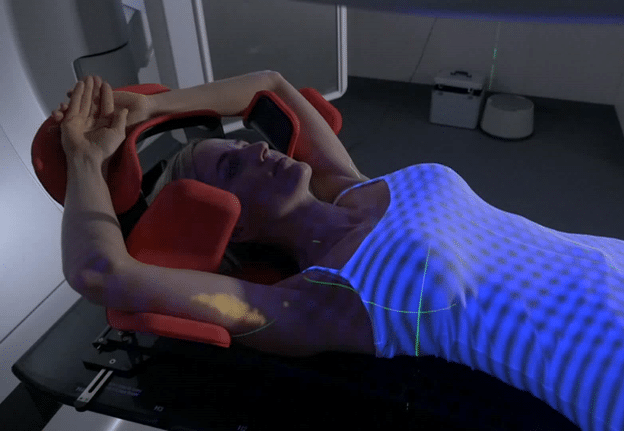 4. Standardize SGRT for every patient
Expand beyond DIBH or SBRT and make SGRT part of every setup.
Consistency across all treatments reduces variation and builds team confidence. “Once we used it for everyone, it stopped being a specialty tool, it became how we do radiation therapy,” Barrett says.
That consistency also enhances precision. Shaun McCormick, Radiation Therapist, explains, “If we’re aiming for such tiny margins, I need to know we’re staying in those margins the entire time. Surface guidance gives me that confidence.”
Clinics report measurable workflow improvements, too. Trenda Mullen notes that with SGRT, “frog-legged pelvis setups are much easier to reproduce; it prevents multiple scans and makes treatments more efficient.”
From a physics standpoint, Kristyn Koepp adds, “If a patient moves outside tolerance, the system automatically holds the beam, a feature I truly appreciate.”
Lesson learned: Treat SGRT as the standard, not the exception. When every patient benefits from the same workflow, teams become faster, safer, and more consistent, and patients feel the difference.
5. Build a culture of learning and sharing
Implementing SGRT across all cases isn’t just about adopting new technology; it’s about creating a confident, consistent culture of learning that benefits both patients and staff.
Even after SGRT becomes routine, continued education and collaboration sustain the benefits. “SGRT isn’t just a technology, it’s a culture shift,” Barrett says. “Every clinic has to build its own rhythm. What matters most is sharing experiences and helping each other grow.”
At OCSRI, that growth means integrating surface guidance into every treatment—3D, IMRT, DIBH, and even SRS/SBRT—while continuously refining the workflow.
“Every patient, every treatment, every day, we trust SGRT,” Barrett says. “And that trust came from learning together.”
Lesson learned: The real success of SGRT comes when it becomes a culture—one built on teamwork, learning, and shared experience that delivers confidence and precision for every patient.
Bottom line: At Oklahoma Cancer Specialists and Research Institute, adopting SGRT was never just about adding new technology—it was about redefining how the entire team works together. Their success shows that when learning and collaboration become part of the clinic’s culture, confidence and consistency follow. To explore how your clinic can begin its own SGRT journey, click here to request a personalized demonstration from the C-RAD experts.

You might also be interested in


